

RERA Explained: Key Rules Every Buyer Should Know
Understand key RERA rules, buyer rights, and safeguards to avoid fraud and make safe real estate investments in India.
 Bikramjeet SinghUpdated 5 months Ago4 Mins read
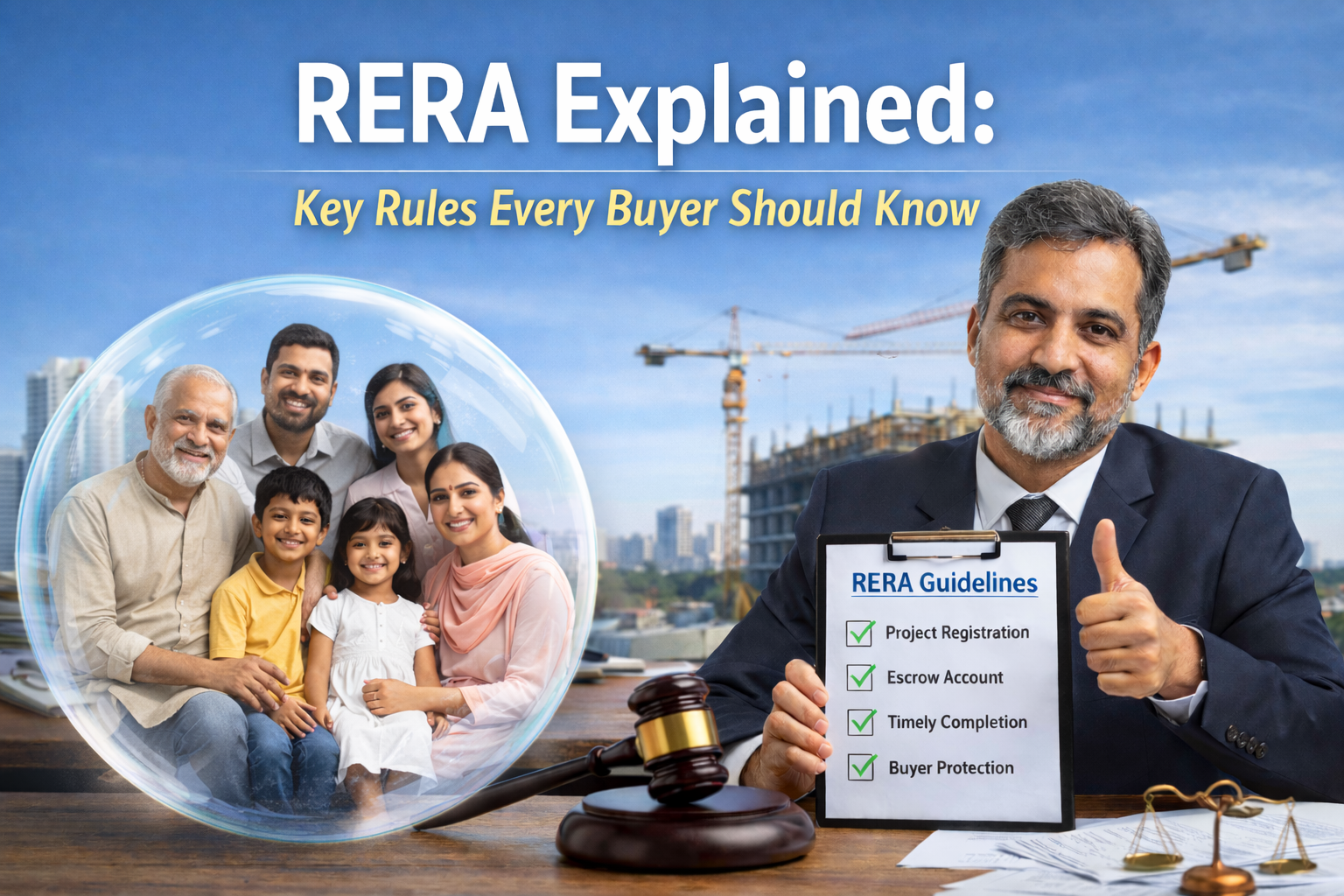
The Indian real estate market, once known for its lack of transparency and delayed project deliveries, has undergone a major transformation with the introduction of the Real Estate (Regulation and Development) Act, 2016 (RERA). This landmark legislation has reshaped the way property transactions are conducted, bringing accountability, transparency, and security for homebuyers.
Whether you are a first-time buyer, an investor, or someone planning to upgrade your home, understanding RERA rules is no longer optional—it is essential. This comprehensive guide will help you decode the most important RERA provisions, how they protect you, and how you can use them to make informed property decisions.
What is RERA and Why Was It Introduced?
Before RERA came into force in 2016, the real estate sector in India was largely unregulated. Buyers often faced issues like:
- Project delays
- Misleading advertisements
- Changes in layout plans
- Hidden charges
- Poor construction quality
To address these challenges, the government introduced RERA to create a standardized framework that protects buyers and regulates developers.
Key Objectives of RERA
- Ensure transparency in property transactions
- Protect buyers from fraud and delays
- Standardize practices across states
- Establish a grievance redressal mechanism
- Boost investor confidence in real estate
Mandatory RERA Registration for Projects
One of the most critical rules under RERA is that all residential and commercial projects must be registered before they are marketed or sold.
What Does This Mean for Buyers?
- Developers cannot sell or advertise unregistered projects
- You can verify project details on the official RERA website
- All project information is publicly accessible
Projects That Require Registration
- Land area exceeding 500 sq. meters
- More than 8 apartments in a project
- Ongoing projects without completion certificates
Why It Matters
This rule ensures that you are not investing in illegal or unauthorized developments.
Full Transparency in Project Details
Under RERA, developers must disclose complete project details, including:
- Layout plans
- Land status and approvals
- Construction timelines
- Number of units
- Contractor and architect details
This information must be updated regularly on the RERA portal.
Buyer Advantage
You no longer have to rely solely on sales pitches. Every detail is verified and accessible, reducing the chances of misinformation.
Strict Rules on Advance Payment
RERA limits the amount a builder can collect before signing a sale agreement.
Key Rule
- Builder cannot take more than 10% of the property value as advance booking amount without a registered agreement for sale.
Why This Protects Buyers
Earlier, buyers paid large sums without legal backing. Now, your money is secured under a formal agreement.
Escrow Account: Safeguarding Your Money
One of the most powerful provisions under RERA is the escrow account rule.
What is the Rule?
- 70% of the project funds must be deposited in a separate escrow account
- Funds can only be used for that specific project
Impact on Buyers
- Prevents fund diversion
- Ensures timely construction
- Reduces project delays
Timely Project Completion
Project delays were one of the biggest pain points for buyers before RERA.
What RERA Says
- Developers must declare project completion timelines
- Any delay results in penalties
Compensation Rule
If the builder delays possession:
- Buyer is entitled to compensation or interest
- Buyer can withdraw from the project and claim a refund
This ensures accountability and reduces uncertainty.
Carpet Area Standardization
Before RERA, builders often used confusing terms like “super built-up area.”
RERA Definition
Carpet area = Net usable floor area inside the apartment (excluding walls, balconies, terraces)
Why This Matters
- You pay only for the actual usable space
- Eliminates misleading pricing tactics
No Changes Without Buyer Consent
Developers cannot make major changes to the project without approval.
Key Rule
- Any structural changes require consent from at least 2/3 of the buyers
Buyer Benefit
You get exactly what was promised—no surprises later.
Defect Liability Period (5 Years)
RERA holds builders accountable even after possession.
Rule
- Developers must fix structural defects within 5 years of possession
Examples of Defects
- Cracks in walls
- Plumbing issues
- Poor construction quality
Buyer Advantage
Ensures long-term quality assurance.
Equal Interest Rate for Buyer & Builder
RERA ensures fairness in financial penalties.
Rule
- Same interest rate applies to both buyer and builder
Example
- If you delay payment → pay interest
- If builder delays possession → builder pays interest
This creates a balanced system.
Grievance Redressal Mechanism
RERA provides a dedicated platform for dispute resolution.
How It Works
- Buyers can file complaints online
- Cases are resolved within a fixed timeline
- Appeals can be made to the appellate tribunal
Why It Matters
No need for long court battles—faster and more efficient justice.
Mandatory Registration of Real Estate Agents
Not just developers—even agents must be registered under RERA.
Key Rule
- Only registered agents can sell RERA-approved projects
Buyer Benefit
- Reduces fraud by brokers
- Ensures accountability
Advertisements Must Match Reality
RERA strictly regulates marketing claims.
Rule
- All advertisements must match actual project details
- Misleading promotions are punishable
Impact
No more false promises or exaggerated claims.
Documents Every Buyer Must Check Under RERA
Before buying any property, verify the following:
- RERA registration number
- Approved layout plan
- Builder’s past track record
- Project completion timeline
- Legal approvals
Common Mistakes Buyers Still Make
Even with RERA in place, many buyers make avoidable errors:
1. Not Checking RERA Registration
Always verify before investing.
2. Ignoring Agreement Terms
Read every clause carefully.
3. Overlooking Developer History
Past performance matters.
4. Blindly Trusting Marketing
Cross-check everything on the RERA portal.
How RERA Has Changed Indian Real Estate
RERA has brought a massive shift in the industry:
Before RERA
- Unregulated market
- High risk
- Frequent delays
After RERA
- Increased transparency
- Buyer confidence
- Organized real estate sector
RERA in Different States: What You Should Know
Although RERA is a central law, its implementation varies across states.
For example:
- Punjab has its own RERA authority
- Maharashtra has MahaRERA
- Haryana operates HRERA
Important Tip
Always check the specific state RERA portal for accurate project details.
Is RERA Applicable to Resale Properties?
RERA primarily applies to new and ongoing projects.
Resale Properties
- Not directly covered
- However, registered agents must follow RERA rules
Expert Tips for Buyers Using RERA
- Always invest in RERA-registered projects
- Use RERA portal for verification
- Keep all documents recorded
- Avoid cash transactions
- Consult legal experts if needed
Future of Real Estate with RERA
RERA is continuously evolving, and its long-term impact includes:
- Higher trust in the real estate market
- Increased foreign investment
- Better project planning and execution
- Professionalization of developers and agents
Conclusion: Why RERA is a Game-Changer
The Real Estate (Regulation and Development) Act, 2016 is not just a regulatory framework—it is a powerful tool that empowers homebuyers.
It has shifted the balance of power from developers to buyers, ensuring fairness, transparency, and accountability at every stage of the property buying journey.
If you are planning to invest in real estate, understanding RERA rules can save you from costly mistakes and help you make smarter, safer decisions.
Final Thought
Real estate investment is one of the biggest financial decisions you will make. With RERA in place, you now have the legal backing and tools to protect your investment—use them wisely.
- builder rules India
- buyer rights RERA
- homebuyer protection
- housing laws India
- property buyer guide
- property fraud prevention
- property investment safety
- property law India
- PropertyPockets
- real estate act India
- real estate regulation act
- real estate transparency
- RERA benefits
- RERA compliance
- RERA registration
- RERA rules






From Lead Generation to Trust Generation: The Rise of Content-Led Real Estate Marketing
How Content is Reshaping the Psychology, Branding, and Business of Modern Real...
 PropertyPockets6 Mins read

How to Avoid Property Frauds: A Complete Buyer’s Guide
Learn how to avoid property frauds in India with legal checks, expert...
PropertyPockets5 Mins read

Aerocity: The “Madhya Marg” of Mohali in the Making?
A Property Pockets Exclusive Conversation with Mr. Sanjeev Thakur
PropertyPockets5 Mins read

Why Property Brokers Are Failing in 2026 – The Big Industry Shift
Discover why old property brokers are failing and how real estate advisory...
PropertyPockets5 Mins read





Leave a comment