

GMADA Policies Impact on Property Prices in Mohali & Tricity
Explore how GMADA policies shape property prices in Mohali, Aerocity & Tricity with deep insights on demand, supply & regulations.

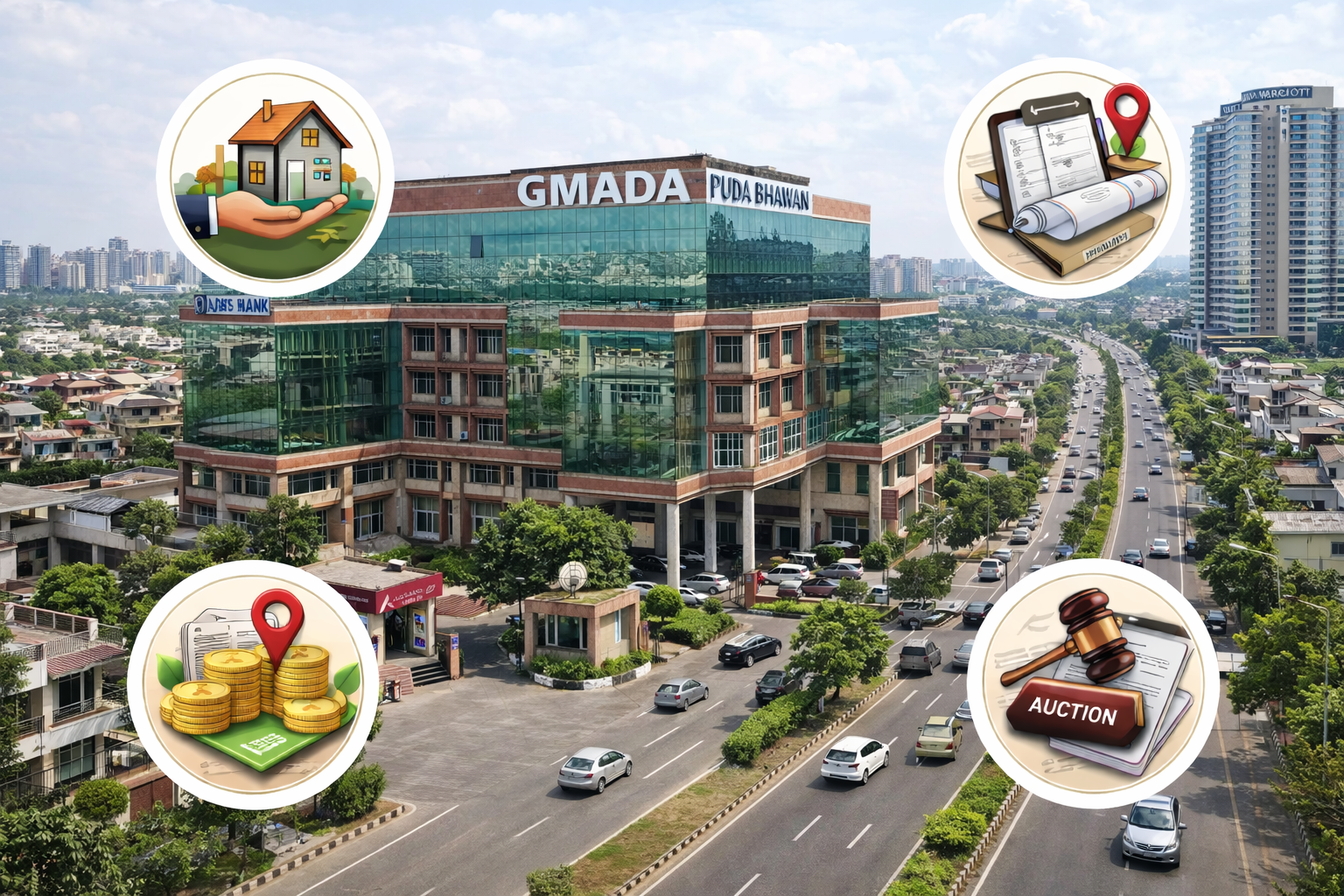
The real estate market of Mohali and the larger Tricity region (Chandigarh–Mohali–Panchkula) is no longer driven purely by demand and supply—it is deeply shaped by policy. At the center of this transformation is Greater Mohali Area Development Authority (GMADA), whose policies influence everything from land acquisition to building height, zoning, and pricing benchmarks.
Understanding how GMADA policies impact property prices is critical for investors, builders, and end-users. Because in today’s market, prices don’t just rise due to “location”—they rise due to policy-enabled potential.
This article breaks down, in-depth, how GMADA’s evolving rules, reforms, and governance directly and indirectly shape property values across Mohali, Aerocity, IT City, New Chandigarh, and peripheral growth corridors.
1. GMADA: The Policy Engine Behind Mohali’s Growth
GMADA was established under the Punjab Regional and Town Planning framework to regulate and develop key urban areas like Mohali, Aerocity, Zirakpur, Banur, and New Chandigarh.
Its core responsibilities include:
- Land acquisition & development
- Zoning and master planning
- Approval of building plans
- Auction and pricing of plots
- Infrastructure development
This means one thing:
👉 GMADA doesn’t just regulate the market—it creates the market.
2. Land Pooling Policies: The Biggest Price Catalyst
One of the most impactful GMADA interventions has been the Land Pooling Policy, especially recent updates in 2025.
How Land Pooling Works
Instead of outright acquisition, landowners are offered developed plots in exchange for their land.
- Up to 1,000–1,600 sq yards developed plots per acre in return
- Includes residential + commercial components
Impact on Property Prices
1. Massive Supply Creation
Land pooling unlocks large land banks for planned development.
👉 Result:
- New sectors (PR-7 Road, Aerotropolis, Eco City)
- Increased supply → initially stabilizes prices
2. Future Price Appreciation
Once infrastructure develops:
- Roads, metro proposals, commercial hubs
- Demand spikes → prices surge
3. Speculative Investment Boom
Investors enter early in pooled zones:
- Prices rise even before development
However, policy resistance (from farmers) has delayed execution in some areas, creating price volatility and uncertainty.
👉 Insight:
Land pooling creates “future price zones”—but delays can freeze capital.
3. FAR & Ground Coverage Rules: Hidden Drivers of Pricing
One of the most underrated factors affecting property prices is FAR (Floor Area Ratio) and ground coverage limits under GMADA.
Current Rules Snapshot:
- Up to 250 sq yards: 70% coverage
- 251–500 sq yards: 65% coverage
- Above 500 sq yards: 60% coverage
- FAR:
- Up to 500 sq yards: 2.0
- Above 500 sq yards: 1.75
How FAR Impacts Prices
1. More FAR = More Saleable Area = Higher Value
If a builder can construct more:
- More floors
- More units
- More revenue
👉 Land value increases.
2. Limited FAR = Premium Scarcity
In GMADA areas:
- Lower coverage vs MC areas (80–85%)
👉 Result:
- Less density
- Better planning
- Higher premium pricing
3. Investor Insight
Two identical plots:
- GMADA regulated vs non-regulated
👉 GMADA plot often commands:
- Higher price per sq yard
- Better resale confidence
4. Building Height Policies: Vertical Growth = Price Growth
Punjab’s updated rules now allow:
- Stilt + 4 floors construction
- Height increased to 21 meters
Market Impact
1. Builder Floors Boom
Earlier:
- G+2 limit
Now:
- More units per plot
👉 Result:
- Increased supply
- Competitive pricing in builder floor segment
2. Land Price Surge
If one plot can generate:
- 4–5 saleable units instead of 2–3
👉 Land value increases significantly.
3. Rental Yield Improvement
More units = more rental income potential
→ Investors pay premium
Key Insight:
Vertical expansion policies directly multiply land value.
5. GMADA Auctions & Reserve Pricing: Price Benchmarking
GMADA regularly auctions residential, commercial, and institutional plots.
Why Auctions Matter
- They act as price discovery tools
- Market follows GMADA’s reserve pricing
Recent developments:
- Unsold properties triggered price reassessment by independent valuers
Impact on Property Prices
1. High Reserve Prices → Market Push Up
If GMADA sets:
- ₹2 lakh/sq yard
👉 Private market aligns or exceeds
2. Overpricing → Market Correction
Unsold inventory signals:
- Market saturation
- Artificial price inflation
3. Transparency Boost
Independent valuation:
- Reduces speculation
- Aligns with real demand
Insight:
GMADA auctions are the “stock market index” of Mohali real estate.
6. Zoning & Master Planning: The Real Price Multiplier
GMADA controls zoning via master plans and sector layouts.
Zoning Types:
- Residential
- Commercial
- Industrial
- Institutional
Impact on Prices
1. Commercial Conversion = Price Explosion
When land shifts from:
- Residential → Commercial
👉 Price jumps 2x–5x
2. Mixed-Use Development
Modern sectors:
- SCO + retail + residential
👉 Higher demand
👉 Higher pricing
3. Infrastructure-Led Appreciation
Example:
- PR-7 Road
- Aerocity
- IT City
👉 Planned corridors see exponential growth
Insight:
Zoning changes create instant wealth in real estate.
7. Approval & Compliance Policies: Trust = Price Premium
GMADA has simplified approval processes:
- Self-certification by architects for plots up to 500 sq yards
- Faster approvals
- Clear documentation
Impact on Market
1. Buyer Confidence Increases
GMADA-approved projects:
- Lower legal risk
- Higher trust
2. Premium Pricing
Buyers pay extra for:
- Clear title
- Approved layouts
3. Reduced Illegal Colonies
Strict enforcement:
- Cracks down on unauthorized projects
Insight:
Trust-driven markets always command higher prices.
8. Infrastructure Policies & Mega Projects
GMADA drives large-scale developments like:
- Aerotropolis
- IT City
- Eco City
- PR-7 Corridor
Impact on Property Prices
1. Infrastructure = Appreciation Trigger
Roads, connectivity, commercial hubs:
- Increase demand
2. Peripheral Growth
Shift from saturated Chandigarh to:
- New Chandigarh
- Kharar-Landran Road
3. Early Investment Advantage
Prices in early stages:
- 30–50% lower
Later:
- 2x–3x growth potential
9. Charges, Fees & Financial Policies
Policies like:
- Enhancement charges
- CLU (Change of Land Use)
- External Development Charges
Recent example:
- Reduction in enhancement charges provided relief to buyers
Impact on Prices
1. Higher Charges = Higher End Price
Developers pass costs to buyers
2. Reduced Charges = Demand Boost
Lower cost:
- More buyers enter
3. Investor Psychology
Policy relief:
- Creates buying sentiment
10. Policy Uncertainty: The Biggest Risk Factor
Not all policies have positive outcomes.
Challenges:
- Land pooling resistance
- Policy delays
- Legal disputes
- RERA interventions (delayed possession cases)
Impact on Prices
1. Short-Term Slowdown
Buyers hesitate
2. Long-Term Opportunity
Delayed areas:
- Become undervalued
Insight:
Uncertainty creates both risk and opportunity.
11. GMADA vs Non-GMADA Areas: Price Comparison Logic
| Factor | GMADA Areas | Non-GMADA Areas |
|---|---|---|
| Regulation | Strong | Weak |
| Planning | Structured | Mixed |
| Pricing | Premium | Lower |
| Risk | Low | High |
| Appreciation | Stable + Growth | Volatile |
Key Conclusion:
GMADA-regulated areas command a premium because they offer predictability, legality, and long-term value.
12. Future Outlook: Where Prices Are Headed
Based on current policies:
1. Aerocity & IT City
- High-end commercial + residential growth
2. PR-7 Road & New Chandigarh
- Next appreciation corridors
3. Builder Floor Markets
- Boom due to Stilt+4 policy
4. Land Pooling Zones
- High-risk, high-reward investments
Final Conclusion
GMADA policies are not just administrative tools—they are price-making mechanisms.
From FAR rules to land pooling, from auctions to zoning, every policy decision directly impacts:
- Land value
- Construction potential
- Buyer confidence
- Market demand
The Core Truth:
👉 In Mohali real estate, policy = price.
If you understand GMADA policies:
- You can predict price movements
- Identify undervalued zones
- Invest before the market reacts
If you ignore them:
- You’re just following the crowd
- Aerocity property rates
- GMADA development impact
- GMADA FAR rules
- GMADA land acquisition
- GMADA plot prices
- GMADA policies
- GMADA regulations
- GMADA rules impact
- land pooling Punjab
- Mohali Investment
- Mohali Property Prices
- Mohali real estate trends
- property price drivers Punjab
- Punjab building rules
- Tricity Property Market








Umang Jindal Says He Doesn’t Do Marketing. Then What Are We Calling This?
Why trust, reputation and word of mouth may matter more than traditional...
 Bikramjeet Singh7 Mins read

Aerocity: The “Madhya Marg” of Mohali in the Making?
A Property Pockets Exclusive Conversation with Mr. Sanjeev Thakur
 PropertyPockets5 Mins read
Chandigarh Saturation: Rise of Peripheral Real Estate Hubs
Chandigarh saturation is driving buyers to Mohali, Zirakpur & New Chandigarh. Explore...
PropertyPockets4 Mins read

GMADA vs Private Developers – Who Is Shaping Tricity Faster?
GMADA vs private developers in Tricity real estate—compare speed, planning, pricing, and...
PropertyPockets4 Mins read





Leave a comment