

Top 5 Traffic Hotspots in Mohali (And Why They’re Failing)
Discover the top 5 traffic hotspots in Mohali and why poor planning, congestion, and rapid growth are turning them into daily commuter nightmares.

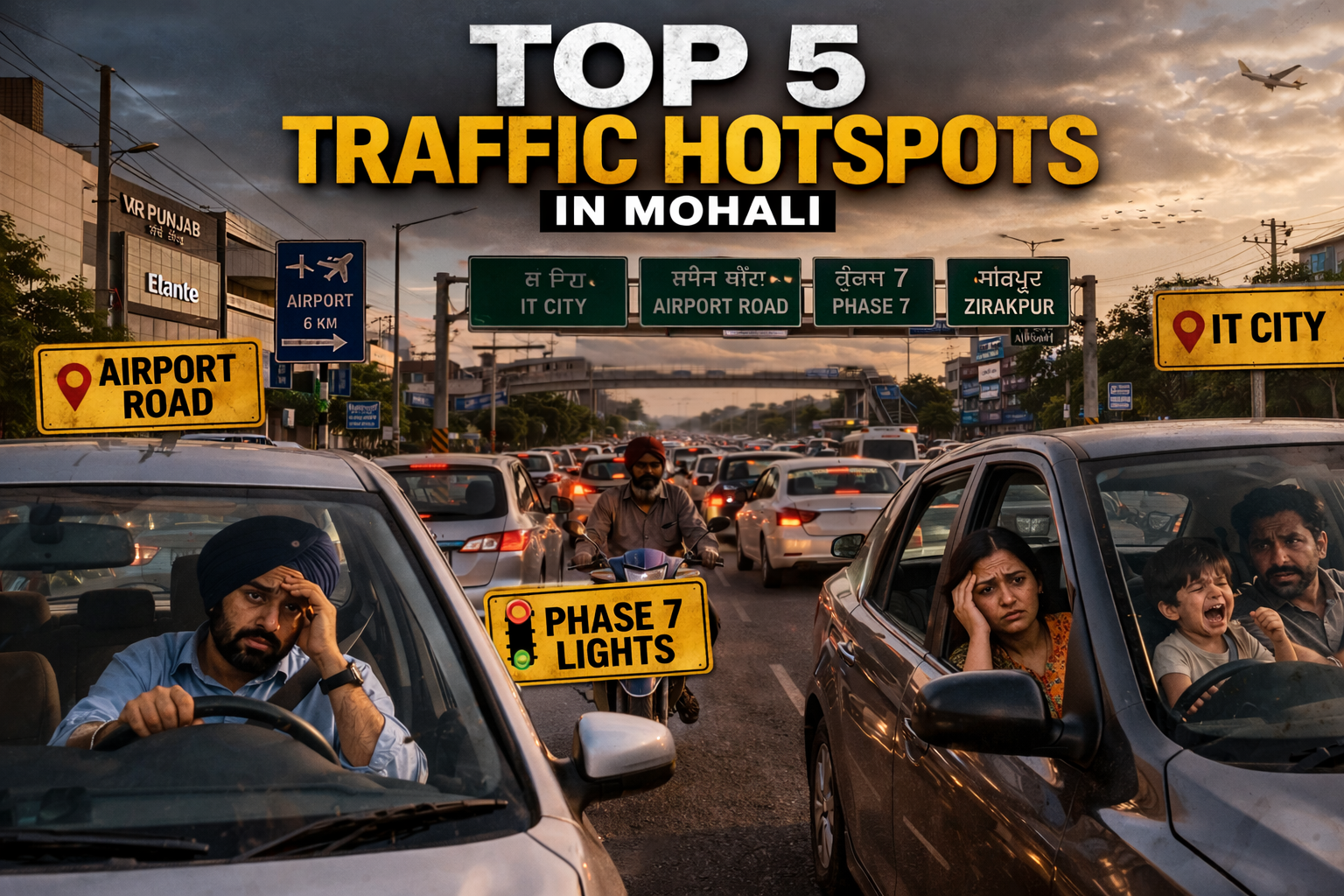
Mohali has grown rapidly in the last 10–15 years. New sectors, IT parks, commercial hubs, airport connectivity, and housing projects have transformed the city into a major real estate and business destination in North India. But with growth comes pressure — and the biggest pressure Mohali is facing today is traffic.
Earlier, people used to choose property based on location and price. Today, people choose property based on travel time. Because in modern cities, time has become more valuable than distance.
There are a few traffic hotspots in Mohali that are becoming major bottlenecks, and these roads are not just traffic problems — they are urban planning and real estate signals. Wherever traffic gets stuck, real estate demand eventually gets affected.
Let’s look at the Top Traffic Hotspots in Mohali and understand why they are failing and what it means for real estate.
1. Airport Road (PR-7 Road)
The Growth Corridor That Became a Bottleneck
Airport Road was planned as Mohali’s premium growth corridor. It connects Chandigarh, Mohali, Aerocity, IT City, and the Airport. On paper, this road looks like the future of Mohali. And yes, development has happened rapidly here — residential projects, commercial projects, showrooms, hotels, offices.
But the problem is development happened faster than traffic management.
Why Traffic Happens Here:
- Too many residential and commercial entry points directly on the main road
- Heavy airport traffic
- Office hour rush from IT City
- Commercial vehicles and logistics movement
- Traffic lights and U-turns breaking flow
Airport Road is not just a road anymore — it has become a mixed-use corridor, which means:
- Residents
- Office workers
- Airport travelers
- Commercial vehicles
- Daily commuters
All are using the same road at the same time.
Real Estate Impact:
Airport Road will remain important, but properties directly on high-traffic stretches may face livability issues, while properties slightly inside, with easy entry/exit, will perform better.
Lesson:
Main road property is not always the best property.
Accessible property is better than visible property.
2. Phase 7 Lights (Mohali Junction)
The City’s Pressure Point
Phase 7 lights is one of the biggest junctions in Mohali. It connects:
- Industrial Area
- Phase 3–5
- Phase 7
- Airport Road
- Chandigarh side
This junction handles office traffic, industrial traffic, local traffic, and inter-city traffic — all at one signal.
Why Traffic Happens Here:
- Multiple roads merging into one junction
- Industrial and commercial vehicle movement
- Office hour peak load
- Signal timing pressure
- No proper slip roads in some directions
This junction is not just a traffic point — it is a city pressure point. When traffic increases in Mohali, Phase 7 lights get blocked first.
Real Estate Impact:
Areas that depend on this junction for daily connectivity may face future congestion-related demand pressure. People will start choosing routes and homes that avoid major junctions.
Lesson:
In real estate, being near a junction is good for commercial property.
But being dependent on a junction is risky for residential property.
3. IT City Road
Jobs Came First, Roads Later
IT City is one of the biggest growth drivers of Mohali. Wherever jobs come, real estate follows. But the problem is, in many Indian cities, jobs come first and infrastructure comes later.
IT City has:
- Offices
- IT companies
- Residential societies
- Daily commuters
- Cabs and transport movement
But road capacity and traffic planning are still catching up.
Why Traffic Happens Here:
- Office entry and exit at the same time (peak hour clustering)
- Cab and shuttle movement
- Limited entry/exit roads
- Rapid residential development nearby
- Road infrastructure still developing
Real Estate Impact:
IT City area will grow because jobs create demand, but traffic will decide which sectors around IT City become premium and which become congested zones.
Lesson:
Where jobs come, demand comes.
But where planning comes, premium pricing comes.
Jobs create growth.
Planning creates premium.
4. Zirakpur Entry Points
The Classic Example of Unplanned Expansion
Zirakpur is one of the fastest-growing affordable housing markets near Mohali and Chandigarh. Thousands of families live here and commute daily to Chandigarh, Mohali, and Panchkula.
The biggest problem?
Entry and exit points.
Most traffic gets stuck at:
- Zirakpur lights
- Flyover entries
- Chandigarh–Ambala highway crossing points
- Baltana side entry
- VIP Road junctions
Why Traffic Happens Here:
- Too many residential societies
- Narrow connecting roads
- Highway traffic + local traffic mix
- Poor entry/exit planning
- High population density
Zirakpur is a classic case where real estate development happened first, traffic planning happened later.
Real Estate Impact:
Affordable markets grow fast, but if infrastructure does not improve, price growth slows and rental market becomes the main support.
Lesson:
Affordable markets grow because of price.
Premium markets grow because of planning.
5. Internal Sector Roads Turning Into Main Roads
The Hidden Problem
One more major issue in Mohali is that many internal sector roads are now being used as main connecting roads because main roads are congested.
This creates:
- Traffic inside residential sectors
- Safety issues
- Noise and pollution
- Parking conflicts
- Reduced livability
When internal roads become main roads, the sector loses its residential peace value.
Real Estate Impact:
In future, gated societies and planned townships will become more valuable because they protect internal roads and control traffic flow.
Lesson:
Future real estate demand will shift from “sector houses” to “planned communities.”
Root Cause – Why These Roads Are Failing
If we look deeply, traffic is not the real problem. Traffic is a symptom. The real problems are:
| Real Problem | Result |
|---|---|
| Rapid real estate development | Population increase |
| Job hubs in specific pockets | Peak hour traffic |
| Mixed-use roads | Residential + Commercial conflict |
| Weak public transport | Everyone uses cars |
| Poor entry/exit planning | Bottlenecks |
| Signals and junction pressure | Traffic jams |
So traffic problem is actually a planning problem, not just a vehicle problem.
What This Means for Real Estate Investors
If you are a buyer or investor, traffic tells you where future demand will go and where it will reduce.
Future Real Estate Rule:
| Situation | Real Estate Impact |
|---|---|
| Near job hubs | Demand high |
| Near major roads | Commercial good |
| Away from traffic but connected | Residential best |
| Near bottlenecks | Slow growth |
| Planned township | Premium growth |
Final Conclusion
Mohali’s traffic hotspots are not just traffic problems — they are signals.
They are telling us:
- Where the city is growing too fast
- Where planning is weak
- Where infrastructure is under pressure
- Where future demand will shift
In the future, property value will not be decided by location.
Property value will be decided by travel time, connectivity, and planning.





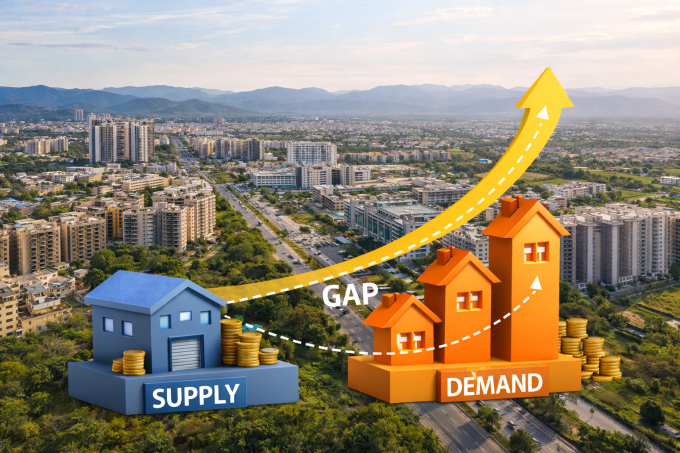
Supply vs Demand Gap in Tricity Real Estate Explained
Understand the supply-demand gap in Tricity real estate, its causes, trends, and...
 PropertyPockets4 Mins read

Commercial Property Boom in Mohali – SCOs, Booths & Offices
Explore why commercial property in Mohali is booming. Expert analysis of SCOs,...
PropertyPockets3 Mins read

Homeland–VRC ₹1,000 Cr Mohali Land Deal Signals Growth
Homeland Group and VRC acquire 18.5 acres in Mohali for ₹1,000 crore....
PropertyPockets4 Mins read
Mohali vs Zirakpur vs New Chandigarh – Where Are Prices Rising Fastest?
Mohali, Zirakpur or New Chandigarh—compare property price growth, investment potential, rental demand...
PropertyPockets3 Mins read




Leave a comment